How to Separate Lead and Zinc from Mixed Wheel Balance Weights
Wheel balance weights are one of the most accessible recycling streams for small metal recyclers: every passenger vehicle carries them, and workshops replace them daily. A European recycler recently asked us how to recover the lead (Pb) and zinc (Zn) from mixed wheel balance weights, where the feed consists of separate lead-based and zinc-based weights rather than a homogeneous alloy — with steel clips and surface coatings mixed in.
Why selective melting is not enough
A common first idea is to melt the weights and drain the metals separately. The problem is physical: conventional melting produces a mixed bath. Lead melts at 327 °C and zinc at 419 °C, so both metals are liquid at the same time, and their oxides and dross mix together. Melting alone consolidates the material — it does not separate it.
How vacuum distillation separates the two metals
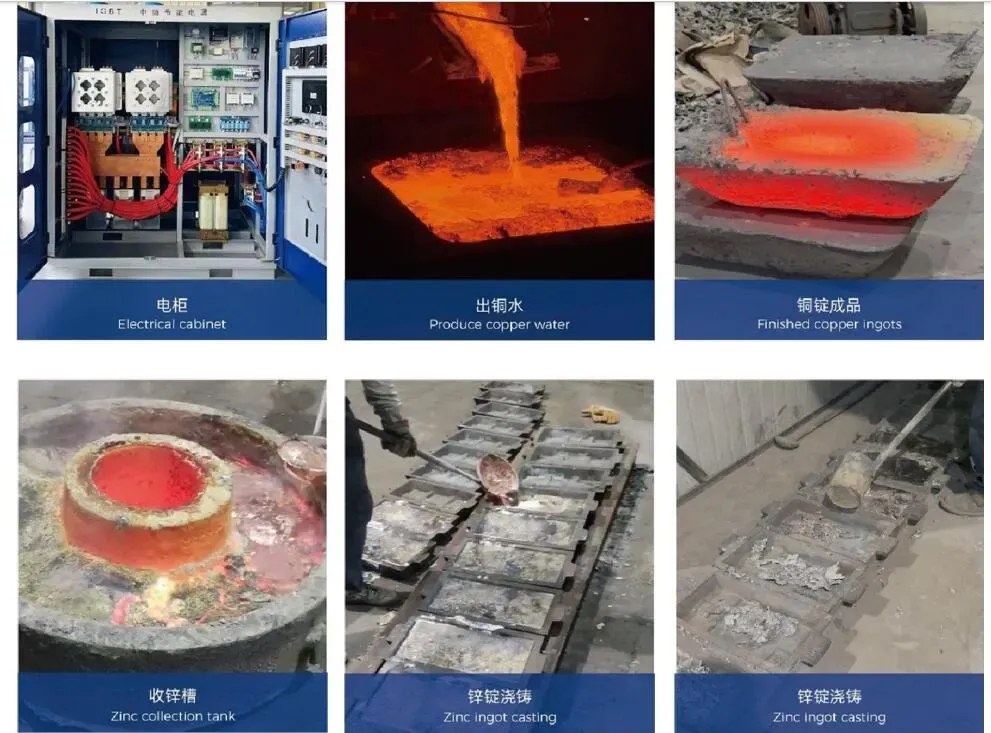
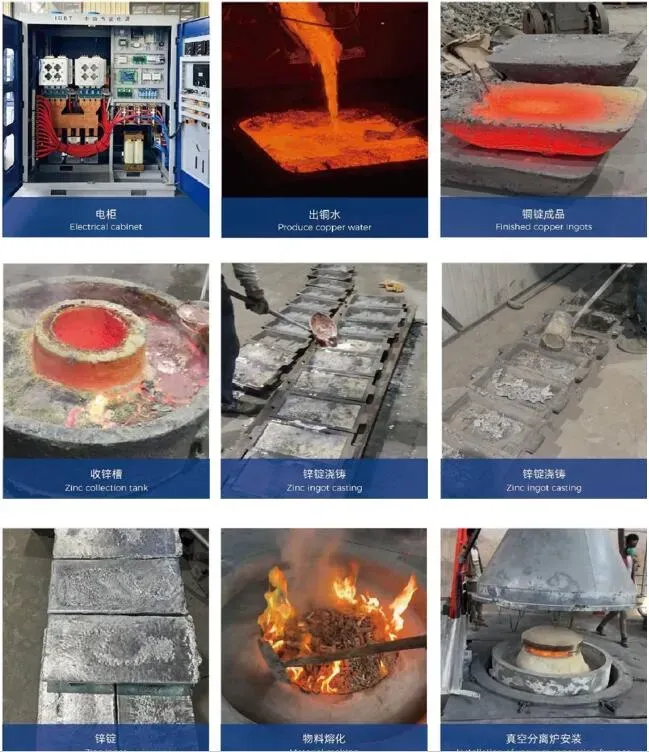
Vacuum distillation exploits the large difference in boiling points: zinc boils at about 907 °C, while lead boils at about 1,740 °C. Inside a vacuum distillation furnace, the pressure is reduced so the zinc evaporates at a temperature where the lead stays liquid. The zinc vapor is captured in a condenser and solidifies as metallic zinc blocks, while the lead remains in the crucible and is drained separately. The two metals leave the furnace through two different outlets.
Handling steel clips, coatings and contamination
Wheel balance weights arrive with steel clips attached and often carry surface coatings, dirt and moisture. None of the steel evaporates under vacuum: it stays in the residue together with the lead fraction and is removed as part of the lead output. Surface coatings burn off during melting and are captured by the dedusting and fume extraction system, so the working environment and the exhaust stay clean.
Recommended configuration for wheel weights recycling
For this material we recommend the XCJD-3000KG vacuum distillation furnace: batch capacity 2.4 to 2.8 t, cycle time approximately 4 hours, and daily throughput of 10 to 12 t per 24 hours at roughly 1,000 kWh per batch. Zinc recovery reaches 95 to 96 percent, with cross-contamination levels of about 1 percent zinc in the lead and about 2 percent lead in the zinc. The recovered zinc is collected as metallic blocks, ready for re-melting or resale.
Frequently asked questions
We have separate lead-based and zinc-based weights, not an alloy. Does the process still work?
Yes. The two streams can be processed in sequence: zinc-based weights are charged first and the zinc is distilled out, then lead-based weights are melted and drained as metallic lead. Mixed batches are also handled — the vacuum stage recovers the zinc from whatever zinc content is present.
What happens to the steel clips inside the weights?
Steel does not evaporate under vacuum. It stays in the melt and is removed together with the lead fraction and other residue, so no manual clip removal is required before charging.
Is the recovered zinc metallic or oxide?
Metallic. The zinc vapor condenses on water-cooled surfaces inside the condenser under vacuum, so it solidifies as metallic zinc blocks instead of zinc oxide dust.
Work with the manufacturer
Pingxiang Xinchen Furnace manufactures vacuum distillation furnaces in Pingxiang City, Jiangxi Province, China, and ships worldwide with export packing, manuals and remote commissioning support. Send your feed description and monthly tonnage to ferrytk898@gmail.com or WhatsApp +86 136 1799 5900 — our engineers reply with a configuration proposal within one business day.